
Water, Sanitation and Hygiene (WASH)
FIDA's work on water, sanitation and hygiene combines community water access, hygiene support in emergencies, and education on the safe handling of food and agrochemicals.
The challenge
Safe water, sanitation and hygiene are basic conditions for health, learning and productive work, yet they remain unevenly available in rural Pakistan. According to WHO and UNICEF estimates, about 55 percent of Pakistanis lack safely managed drinking water, and more than 58 percent of rural residents lack safely managed sanitation. Unsafe water and poor hygiene cause diarrhoeal disease and undermine child growth, and the burden falls most heavily on women and girls, who collect water and care for the sick.
Sources: WHO and UNICEF Joint Monitoring Programme; UN World Water Development Report 2026.
Our approach
Community-based projects improve access to safe water and healthy environments, while the Women Open School and Children Ecology Club teach households and children practical hygiene and protection measures.
Key interventions
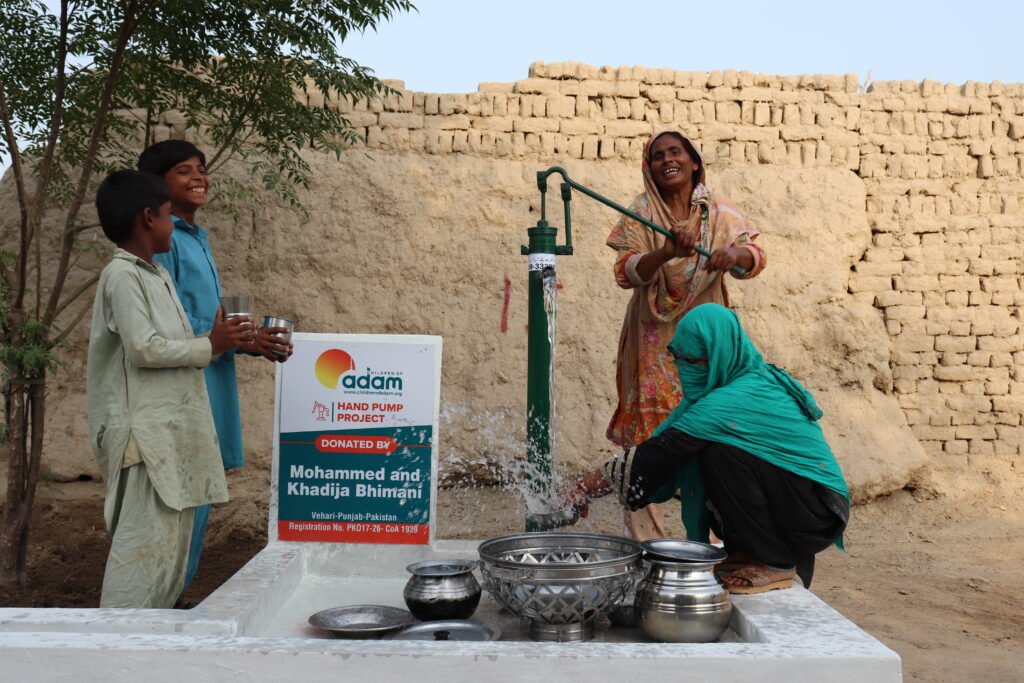
- Sustainable Water Access and Nutritional Resilience (SWANR) in Rural Vehari, with Children of Adam (15 June to 14 August 2026)
- Hygiene kits for households during COVID-19: Standing Strong Against COVID-19 (Penny Appeal, 2020)
- Clean and Healthy Environment through Green Belt Project (Plan International Pakistan, 2008 to 2011)
- Food parcels and hygiene kits during floods and COVID-19
- Women Open School: protection from agrochemical hazards, safe food handling and low-cost protective measures
- Children Ecology Club: recognising and avoiding agrochemical residues in fields, water and stored produce
Results in numbers
- 650Hygiene kits distributed (COVID-19)
- 13,749Food parcels distributed (floods, COVID-19)
Related projects
Water Access and Nutrition in Rural Vehari (SWANR)
- Donor
- Children of Adam
- Duration
- 15 Jun 2026 – 14 Aug 2026
COVID-19 Hygiene Kits
- Donor
- Penny Appeal
- Duration
- Apr 2020 – May 2020
Green Belt for a Healthy Environment
- Donor
- Plan International Pakistan
- Duration
- Aug 2008 – Oct 2011
Models used
Women Open School (WOS) and Children Ecology Club (CEC).
Partners and donors
Donors and partners for individual projects are listed on each project page.
SDG alignment
- SDG 3: Good health and well-being
- SDG 6: Clean water and sanitation
Stories from the field
WASH approach and standards
Gallery
gallery-wash-1gallery-wash-2gallery-wash-3Resources and downloads
Work with us on Water, Sanitation and Hygiene (WASH)
FIDA welcomes partnerships with donors, government departments, research institutions and civil society.